Lao vs Thai Food: What's Actually Different?
By the Travel Laos team · 23 November 2026 · 7 min read · Updated 24 November 2026
In this post
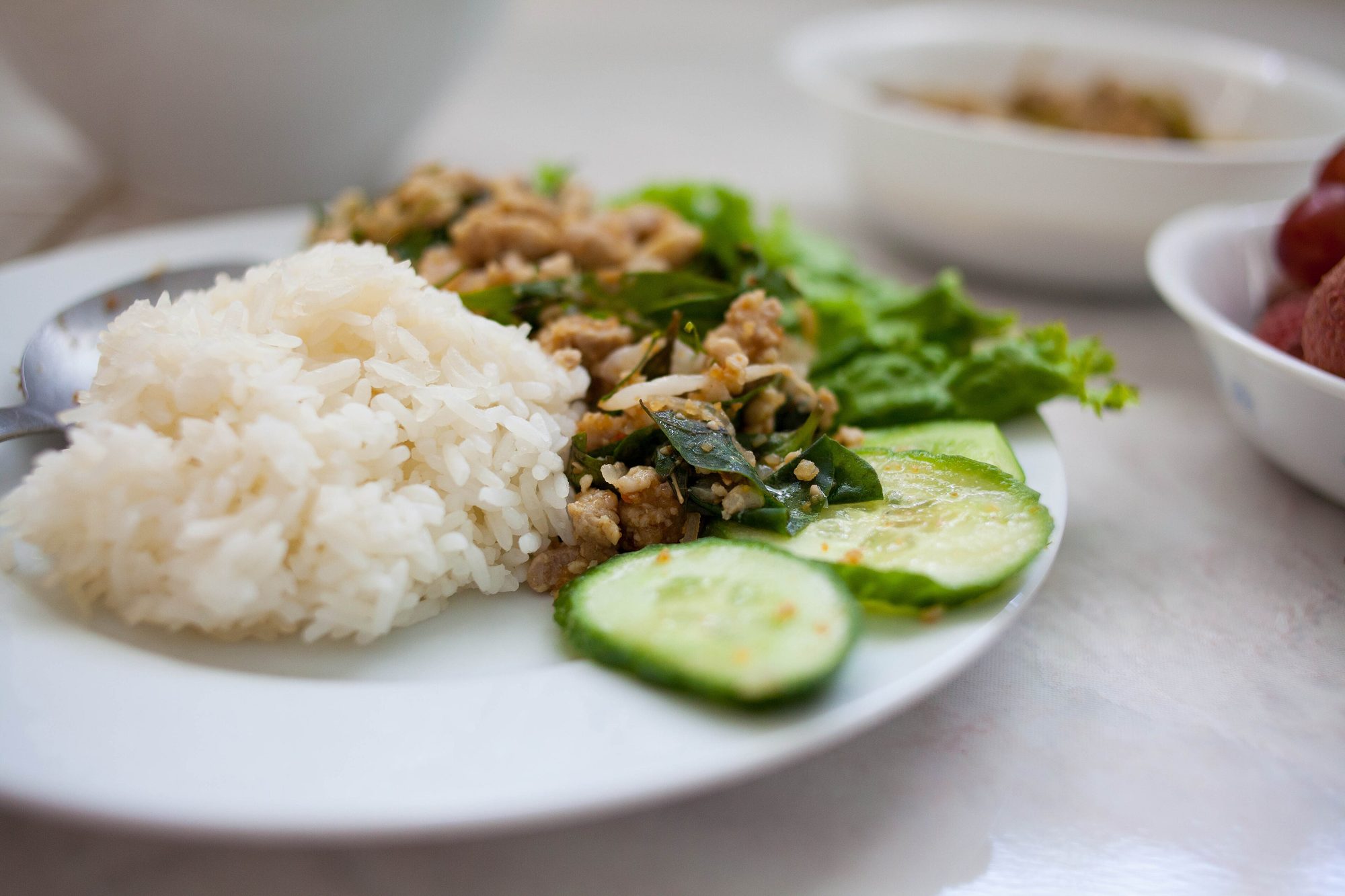
Photo: Sodanie Chea from Norwalk, Ca, United States · CC BY 2.0 · via Wikimedia Commons
Travellers coming from Thailand often arrive in Laos expecting more of the same. The food looks familiar at first — papaya salad, larb, river fish — but after a few meals something feels different. The flavour balance has shifted. The rice is sticky, not steamed. The dipping sauces are darker. The heat is drier, more direct.
Lao and Thai cuisines share deep historical roots, and some dishes crossed the border in both directions over centuries. But eating in Luang Prabang for a week is not the same as eating in Chiang Mai. This guide explains what actually separates them, dish by dish.
The rice question — and why it matters
The clearest difference between Lao and Thai food is not a flavour. It is what sits at the centre of the table.
In Laos, that is khao niaw — glutinous sticky rice, steamed in a bamboo basket and eaten by hand, rolled into small balls and used to scoop up everything else. It appears at almost every meal. It is not a side dish; it is the meal, and everything else is built around it.
In Thailand, the daily staple is jasmine rice — long-grain, fragrant, eaten with a spoon and fork. Thai sticky rice exists, but mainly in desserts or northern dishes. It is not what most Thai people eat for lunch.
This one difference changes everything that follows. Because sticky rice is dense and mildly flavoured, Lao accompaniments contrast it sharply: very salty, very herby, often fiery. Thai dishes on jasmine rice can carry more complexity in the sauce because the rice itself is lighter.
Larb: the same name, a different dish
Larb (sometimes spelled laab or laap) is probably the most famous Lao dish outside the country, and it also appears on menus across northern Thailand. Travellers are sometimes confused when the two versions taste so different.
Lao larb is made from minced meat — most often pork, chicken or buffalo — mixed with toasted ground rice, dried herbs, fish sauce, lime and dried chilli. In rural areas, raw versions exist. The texture is dry rather than saucy, and the flavour is sharp, mineral and hot.
Thai larb, particularly in Isan (northeastern Thailand, where Lao cultural overlap is strongest), is similar. Central Thai versions are typically wetter, milder and sweeter. The toasted rice powder sometimes disappears entirely, and the dish becomes something closer to a warm meat salad.
The Isan region is worth mentioning: Isan cuisine is the closest Thai food comes to everyday Lao cooking, because historically those communities were the same people. If you have eaten Isan food and found it unusually dry and salty compared to Bangkok restaurants, you have already tasted the Lao influence.
For a deeper look at the Luang Prabang food scene and the best spots to try larb and other Lao classics, Top Attractions in Luang Prabang: A Practical Ranked Guide covers the town well.
Papaya salad: tam mak hoong vs som tum
Papaya salad is the dish that most clearly shows what changes when a recipe crosses the border.
The Lao version is called tam mak hoong. It is pounded in a stone mortar with dried shrimp, padaek (a fermented fish paste with a strong, funky smell), chilli, garlic and lime. The result is very salty, very sour, and hot in a way that builds slowly. There is almost no sweetness.
Thai som tum, in its central Bangkok form, adds palm sugar and sometimes tomatoes. The sweetness softens the fermented fish, which is often omitted in favour of plain fish sauce. The result is a more balanced sweet-sour-salty profile that is easier for first-time eaters.
The Lao version is not better or worse — it is simply uncompromising. Order it in Luang Prabang without specifying otherwise, and expect real heat and that deep, savoury funk from the padaek. Eaten with sticky rice, it makes sense in a way it might not on its own.
Herbs, broths and the green flavour of Lao cooking
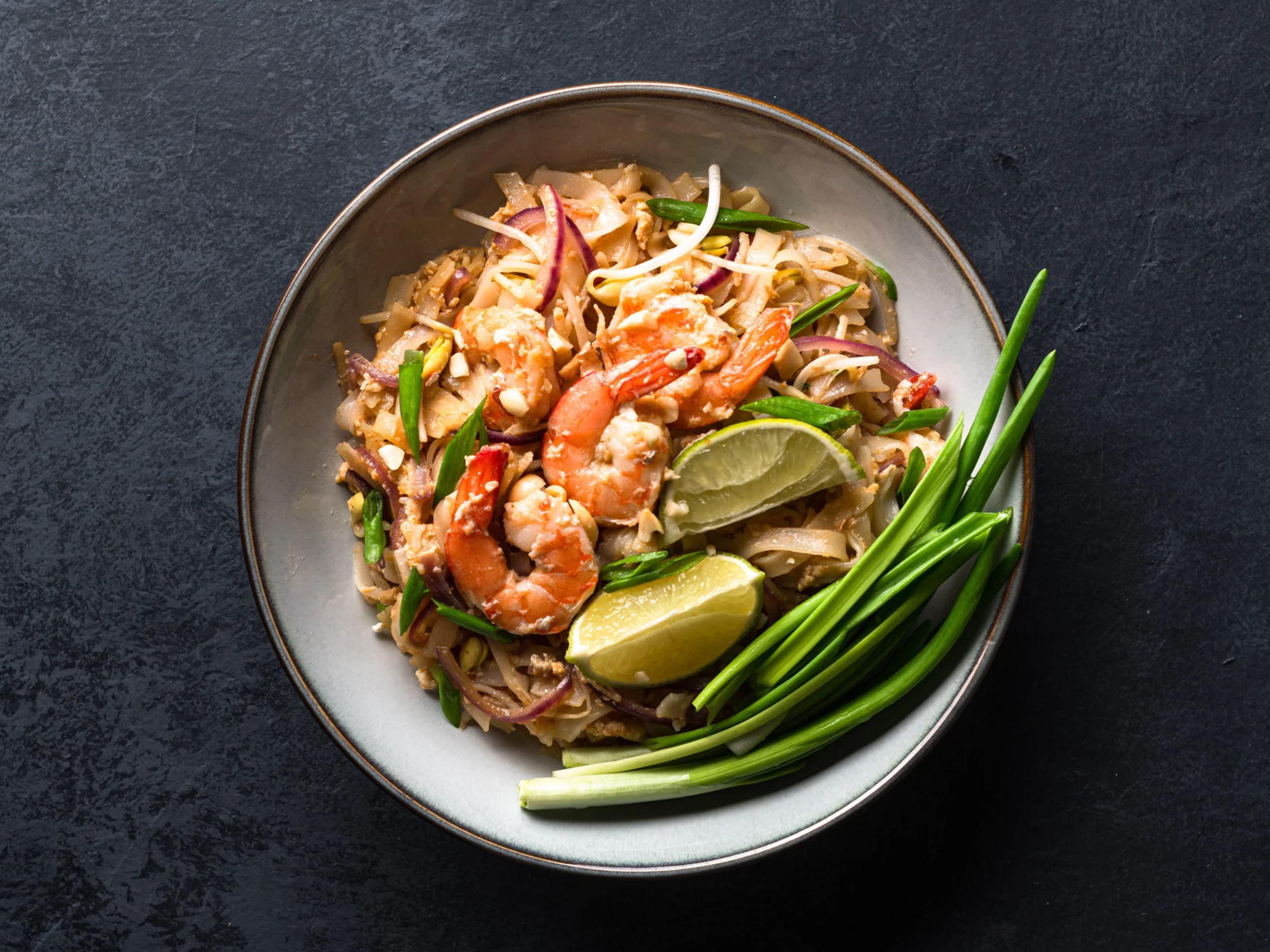
Thai cooking is famous for its layered sauces — coconut milk curries, tamarind-based stir-fries, the sweet-heat of pad thai. Lao cooking tends in a different direction.
Fresh herbs are central: dill, culantro (a stronger cousin of coriander), Vietnamese mint, lemongrass and banana flower appear in dishes that Thai versions would not typically include them in. Dill is a particular marker — it turns up in fish soups and noodle dishes in a way that surprises visitors arriving from Bangkok.
Or lam is the most distinctly Lao dish in this sense: a thick stew from Luang Prabang made with buffalo or pork, dried buffalo skin, aubergine, chilli wood (a woody, slightly numbing ingredient with no Thai equivalent) and a pile of fresh herbs. It is smoky, slow-cooked, deeply savoury and not especially photogenic. It is also one of the most rewarding things you can eat in the city.
Lao broths are generally clear rather than coconut-based. The most common noodle soup is khao piak sen — wide rice noodles in a light pork or chicken broth, finished with herbs and lime at the table. It is as much a breakfast dish as anything else.
Where to try Lao cooking in Luang Prabang
Many restaurants in and around the old town serve traditional Lao dishes. Out on the Nam Khan River, a short drive from the UNESCO Old Town, Roots at The Namkhan serves a farm-to-table menu from its own organic farm, with Lao dishes alongside international ones; you can book a table for dinner without staying the night.
Sweetness and the Lao vs Thai food divide
One consistent difference between the two cuisines is sweetness. Thai food — particularly in Bangkok and central Thailand — incorporates palm sugar into savoury dishes more readily than Lao cooking does. Pad thai has it. Massaman curry has it. Even some dipping sauces carry a background sweetness that smooths the other flavours into the balance that Western diners often love immediately.
Lao food is not sweet. The flavour pillars are salt (from fish sauce and padaek), sour (from lime and sometimes tamarind), bitter (from vegetables like bitter melon and certain leaves) and heat. This can read as harsh on first encounter, but after a few days it starts to feel clean and direct.
Lao cuisine also uses less coconut milk overall than southern Thai or Malaysian cooking. The country is landlocked, the cooking style is drier, and coconut features mainly in desserts.
What to eat first in Luang Prabang
If you are arriving from Thailand and want to understand Lao food quickly, these are the dishes to order, roughly in this order:
- Khao niaw with jeow bong — sticky rice with a roasted chilli-tomato paste. Simple, warm, immediately Lao.
- Khao piak sen — the noodle soup, ideally from a morning market stall.
- Larb — order the pork version and ask for medium heat on your first try.
- Or lam — the Luang Prabang stew. Worth ordering once you have eaten a few other meals and know the kitchen.
- Tam mak hoong — Lao papaya salad, eaten with sticky rice and grilled meat.
For most visitors, the food in Luang Prabang feels both familiar from Thailand and noticeably different. That gap is real and worth paying attention to.
The official Tourism Laos site publishes regional food guides worth checking before you travel.
Questions
Is Lao food like Thai food?
They share roots and some dishes, but Lao food is saltier, hotter, less sweet and built around sticky rice. Thai food — especially in Bangkok — has a more balanced sweet-sour-salt profile and uses more coconut milk.
What is the famous food of Laos?
Larb, tam mak hoong (Lao papaya salad), or lam (Luang Prabang buffalo stew) and khao niaw (sticky rice eaten by hand) are the dishes most closely associated with Lao cuisine.
What do people in Laos eat for breakfast?
Khao piak sen (rice noodle soup) and khao niaw with simple sides are common. Morning markets in Luang Prabang open early and serve both. Sticky rice with chilli paste is a typical start to the day.
Are Thai and Lao food the same in northeast Thailand?
Isan food is the closest Thai cuisine comes to everyday Lao cooking. Larb, sticky rice and papaya salad appear in almost identical forms, reflecting the shared history of those communities across the Mekong.