Phonsavan, Laos: A 3-Day Itinerary from Luang Prabang
By the Travel Laos team · 23 November 2026 · 8 min read · Updated 24 November 2026
In this post
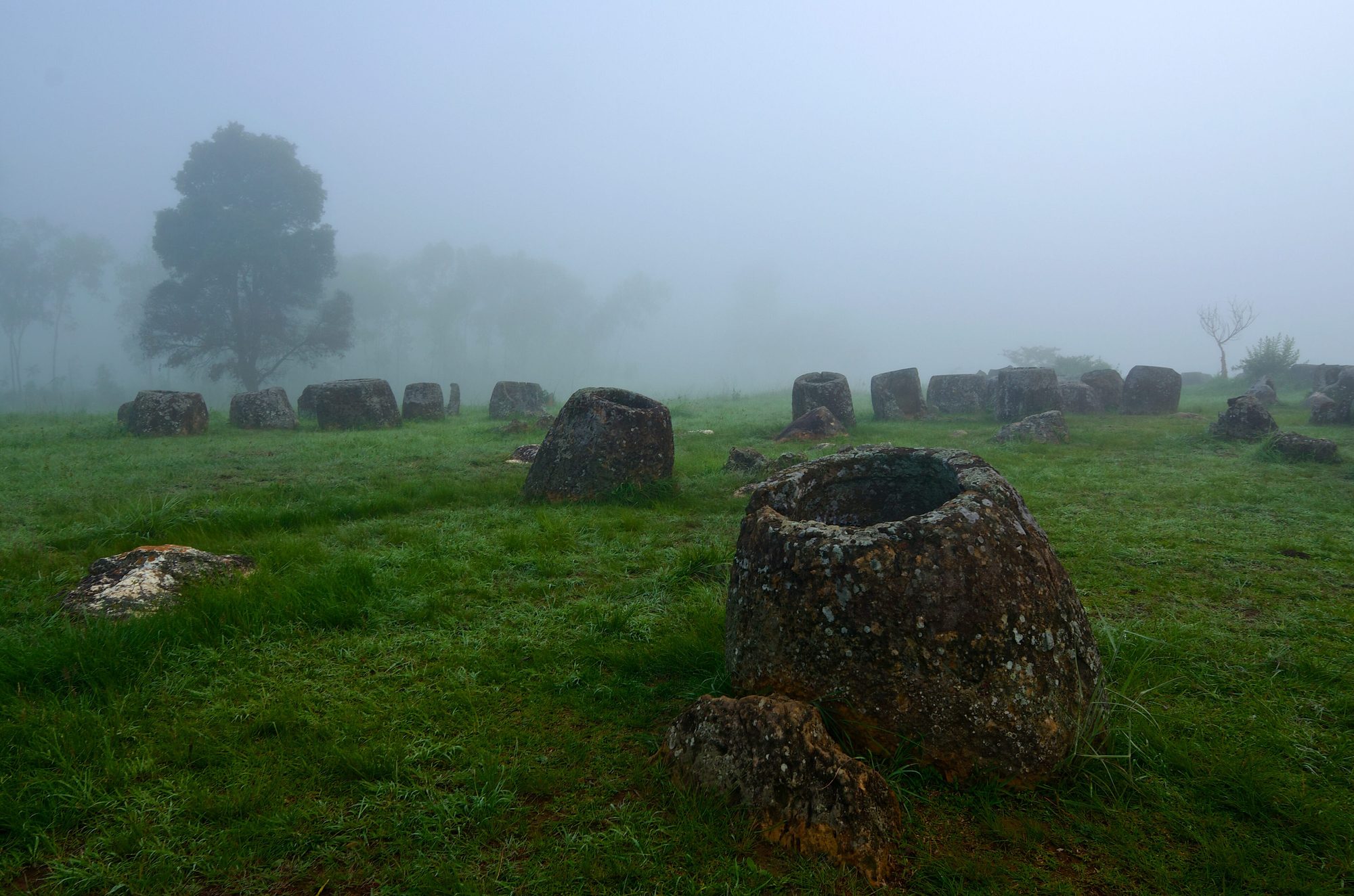
Photo: Emmanuel Campos · CC BY-SA 3.0 · via Wikimedia Commons
Drive the mountain road from Luang Prabang in the dry season and the plateau opens up gradually: rice fields giving way to rolling grassland, the light sharper and cooler than in the river valleys. It is a different Laos, wider and quieter, marked by a complicated history you feel even before you reach the first jar field.
This is a practical itinerary. It gives rough timings rather than fixed schedules, because road conditions and your own pace will shape the days more than any timetable can.
Getting from Luang Prabang to Phonsavan
By air is the simplest option. Lao Airlines operates turboprop flights between Luang Prabang (LPQ) and Phonsavan (XKH). The flight takes around an hour and the views over the plateau on approach are themselves worth the ticket. Check current schedules directly with Lao Airlines, as frequencies change by season.
By road takes seven to nine hours depending on the state of National Route 7 and any stops. The scenery through the mountains is striking. The road climbs steeply out of the Mekong valley and the landscape shifts entirely. Many travellers take a morning minibus, arrive in the afternoon and use the remaining daylight to walk the town market. It is a long day, but manageable.
If you are routing through northern Laos and already have the Laos-China railway in your plans, note that the train does not currently reach Phonsavan. Luang Prabang remains your most practical starting point.
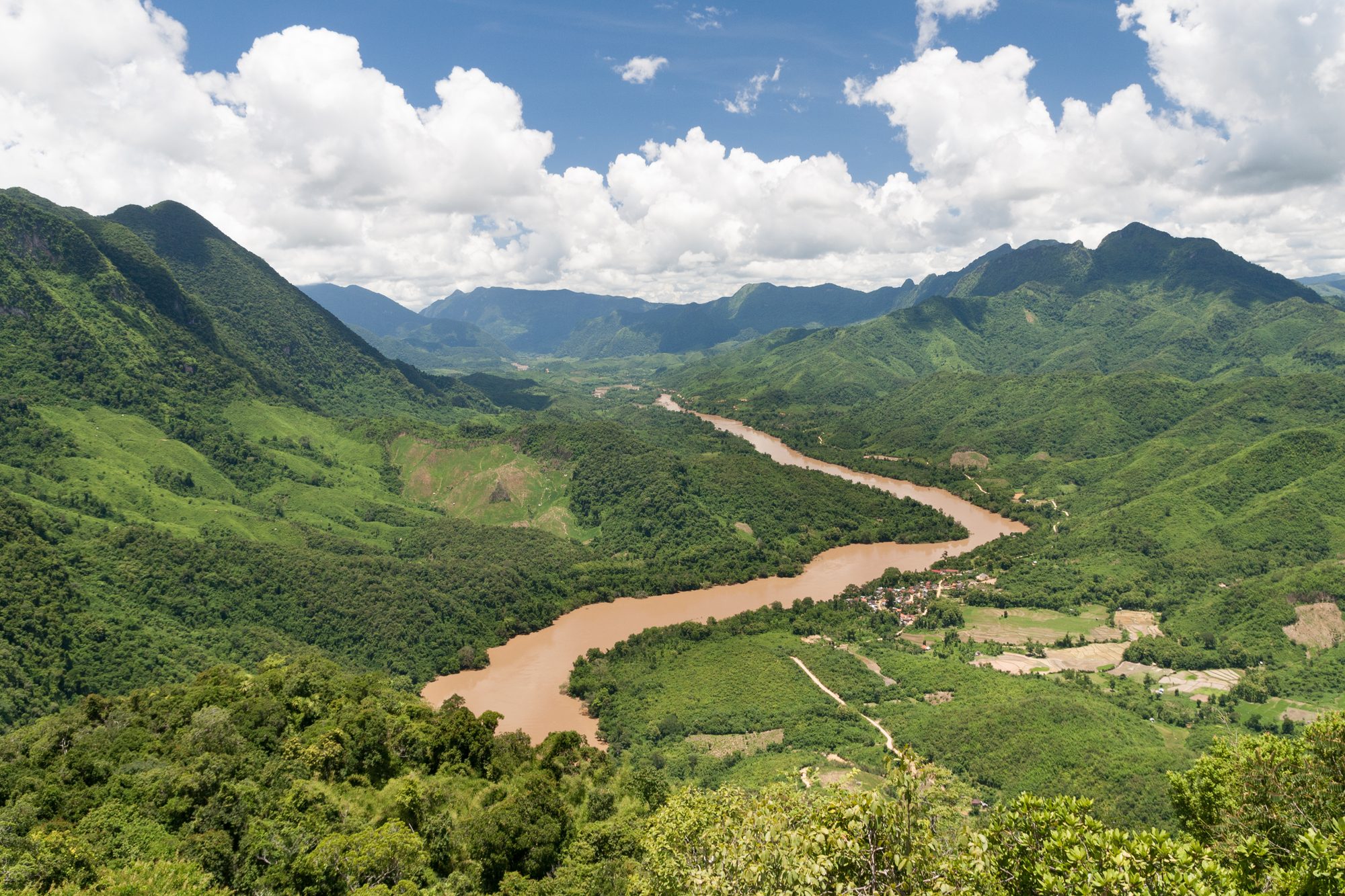 Related readLuang Prabang to Nong Khiaw: Routes, Times & What to Expect
Day 1: Arrive and Walk the Town
Phonsavan was rebuilt largely after the 1960s and 70s war. It is not a place of colonial architecture or river promenades. What it has is good market food, a relaxed atmosphere in the evenings and a cluster of decent guesthouses and restaurants along the main street.
On your first afternoon, walk the morning market, which runs well into the early afternoon. It sells vegetables, smoked meats and dried herbs that reflect the ethnic mix of the plateau: Hmong, Phuan and Khmu communities all trade here. Then visit the MAG (Mines Advisory Group) UXO information centre in town. It is sobering and important. Xieng Khouang province received more bomb tonnage per capita than almost anywhere on earth during the Indochina War, and much of that ordnance remains in the ground. Knowing the context changes how you look at the landscape. MAG's work in the region is ongoing; you can read more at MAG International or the HALO Trust.
In the evening, eat near the central roundabout. Phonsavan's local dish is sien savanh, a dried spiced beef you will see hanging in strips at market stalls. Try it alongside sticky rice and a simple vegetable soup.
Day 2: The Plain of Jars
The Plain of Jars is an archaeological landscape unlike anything else in the region. Thousands of stone jars, some weighing several tonnes, are scattered across the plateau in clusters that archaeologists believe date to the Iron Age, roughly 500 BCE to 500 CE. Their purpose is still debated; the most widely accepted view is that they served in funerary practices, though the full story remains incomplete.
Site 1 (Thong Hai Hin) is the largest and most visited, about 15 km from Phonsavan. It has more than 300 jars and a small cave that local guides describe as a cremation chamber. Start here.
Site 2 (Hai Hin Phu Salato) requires a short walk through rice fields. It is quieter, the landscape wilder. The jars sit in two clusters on a hillside. Plan an hour.
Site 3 (Hai Hin Lat Khai) sits on a hill above a small village and is the least visited of the three. The walk up is worthwhile: you get a broad view of the plateau and are likely to have the site to yourself.
Entry fees apply at each site (fees are modest and payable at the gate; check the current rate there, as it changes). Most guesthouses in Phonsavan can arrange a tuk-tuk or driver for a half-day circuit of all three sites. The drive between them is part of the experience: crater fields, rebuilt villages, schoolchildren cycling home in the afternoon light.
Day 3: That Makmo and the Old Capital at Muang Khoun
This is the day that separates visitors who stayed an extra night from those who did not.
That Makmo — the Watermelon Stupa
That Makmo is a stupa about 30 km south of Phonsavan, in the old royal capital of Muang Khoun. The name means watermelon stupa in Lao: makmo (ໝາກໂມ) is the Lao word for watermelon, and the stupa's smooth, rounded profile gave it the name. It is one of the few structures in Muang Khoun that survived relatively intact, though it shows the marks of the war years.
The stupa stands beside the ruins of Wat Phia Wat, once a significant temple of the Xieng Khouang kingdom. What remains today are stone columns, a large reclining Buddha in the open air and fragments of gilded mosaic that give you a sense of what the site once was. The quiet here is different from the jar fields. This is a place of layered loss, Buddhist significance and gradual, patient restoration.
Muang Khoun: What the Name Tells You
Muang Khoun was the capital of the Phuan kingdom. While you are there, you may encounter the prefix pathum in local temple or village names. Pathum (ປະທຸມ) is a Lao and Pali word meaning lotus. It appears in religious and place names across Laos, and in Xieng Khouang it turns up in the names of local wats and community organisations. The lotus rises from the water unstained, which is why it became a symbol of enlightenment across the Buddhist world, and why the word keeps reappearing wherever temples were built.
Walking around Muang Khoun, you pass monks sweeping temple courtyards in the early morning, wooden houses on stilts and a small market where older Phuan women sometimes sell traditional textiles.
Practical Notes for Your Trip
When to go: the cool dry season from November to March is the most comfortable time on the plateau. Days are clear and sunny; mornings can be cold enough for a fleece. The rains arrive around May and the plateau turns intensely green through the summer months. Roads can be slower then, but the landscape is striking.
What to pack: at 1,200 metres, the temperature drops significantly at night and in the early morning, even in the dry season. Bring a warm layer you would not need in Luang Prabang. Comfortable walking shoes with grip matter at the jar sites, where the ground is uneven.
How many days: two nights covers the main jar sites, That Makmo and Muang Khoun without rushing. A third night allows for slower exploration: village walks, the market at leisure or a guided visit to a Hmong village if arranged respectfully through a local operator.
Getting around Phonsavan: the most practical way to see the jar sites and outlying temples is to hire a local driver or tuk-tuk for the day. Most guesthouses can arrange this. A hired driver who knows the roads and can explain the UXO markings at each site is worth the small additional cost compared to a shared tour. For longer distances — back to Luang Prabang, for example — a minibus seat or private car transfer booked through your guesthouse gives the most flexibility.
After Phonsavan, many travellers combine the plateau with Luang Prabang as a two-destination trip. The top attractions in Luang Prabang guide covers what to do with two or three days in the UNESCO old town.
Questions
Is the Plain of Jars worth visiting?
Yes, for most travellers with an interest in history or archaeology. The scale of the site, the landscape and the general absence of crowds make it genuinely memorable. Plan at least a full day across two or three sites.
How do I get from Luang Prabang to Phonsavan?
By air (around one hour on Lao Airlines) or by road (seven to nine hours by minibus or private car on National Route 7). Flying is faster; the drive is scenic but long.
What does "makmo" mean in Lao?
Makmo (ໝາກໂມ) means watermelon. That Makmo takes its name from the stupa's smooth, rounded shape, which resembles the fruit.
Is Laos safe to travel?
Laos is generally safe for travellers. The main specific hazard in Xieng Khouang is unexploded ordnance: stay on marked paths at all sites. For current official advice, check your government's travel guidance before you go.