Hanoi to Luang Prabang: How to Get There
By the Travel Laos team · 22 November 2026 · 6 min read · Updated 24 November 2026
In this post
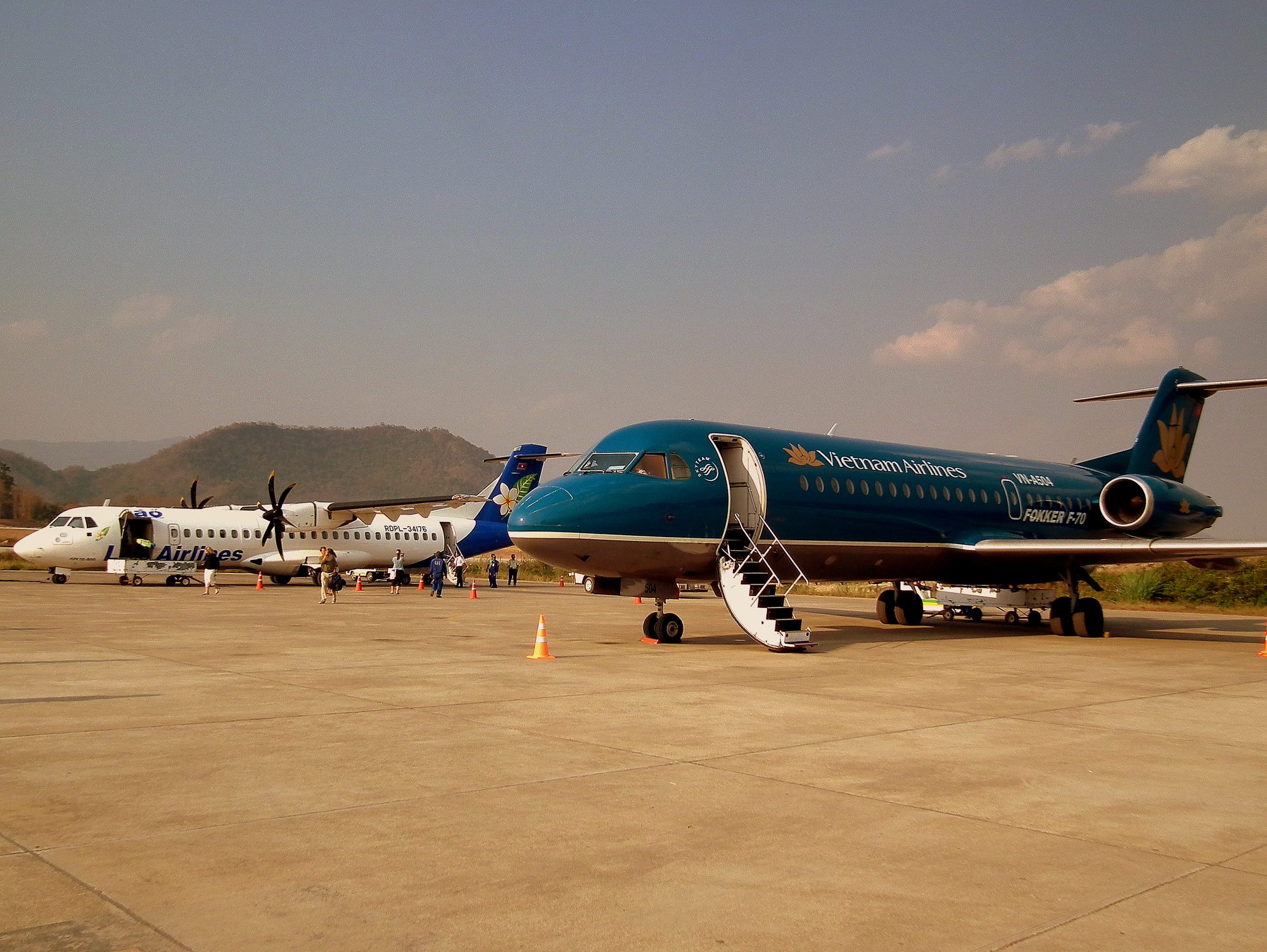
Photo: calflier001 · CC BY-SA 2.0 · via Wikimedia Commons
The journey from Hanoi to Luang Prabang is not a short one, whichever way you go. Vietnam and Laos share a long border, but no train crosses it, and the road route takes a full day and night. Many travellers flying into Southeast Asia from Europe pass through Hanoi before continuing west into Laos — and how you arrive shapes your first hours in Luang Prabang considerably.
This guide covers the three main options: direct flight, overland bus, and a combination route via Vientiane. It explains what to expect from each, and what Luang Prabang looks like when you get there.
By Flight: The Clearest Option
The direct flight from Hanoi Noi Bai International Airport (HAN) to Luang Prabang International Airport (LPQ) takes roughly one hour in the air. Lao Airlines operates this route; Vietnam Airlines serves it seasonally. Schedules and frequencies change, so check current timetables directly with the airlines before you plan.
Luang Prabang airport is small and calm — one of the more pleasant arrivals in Southeast Asia. From the terminal to the UNESCO Old Town takes about 20 to 30 minutes by tuk-tuk or taxi. If you have arranged a hotel transfer in advance, your driver will be waiting at the exit.
One practical note: nationals of most Western countries can obtain a Lao visa on arrival at Luang Prabang airport, or apply for an e-visa in advance. Fees and procedures are updated periodically — check the current requirements at the official Lao e-visa portal or through your government's foreign travel advice before you travel.
 Related readMekong River Cruises: An Insider's Guide from Luang Prabang
By Overland Bus: The Long Road
The bus from Hanoi to Luang Prabang deserves plain description rather than romantic framing. The overland crossing takes between 24 and 28 hours on most schedules, depending on the border crossing used and waiting time at the frontier. Sleeper buses are common on this route; the main crossing point is Nam Phao–Nong Haet in central Laos.
Road quality varies. The final stretch into Luang Prabang winds through mountains and can be uncomfortable, particularly in the wet season (roughly May to October), when roads are slower and visibility drops. Travellers with limited mobility, motion sickness, or tight schedules tend to find the flight a better choice. Those with time and genuine curiosity for the landscape often find value in the journey — the border region between Vietnam and Laos is striking, and you see parts of the country the flight skips entirely.
If you do take the bus, book through a reputable operator rather than the cheapest option available. Comfort levels vary considerably. Pack a light day bag for easy access, bring your own snacks, and carry some US dollars alongside Vietnamese dong. The Lao kip is easier to obtain once you are in Laos, but small amounts of USD are widely accepted at the border.
A Combination Route: Hanoi to Vientiane, Then North
A third option suits travellers who want to cover more ground. Fly or take a train to the Thai border, then travel on to Vientiane, the Lao capital, and from there continue north to Luang Prabang on the Lao–China Railway. The train from Vientiane to Luang Prabang takes around two hours through limestone hills and river valleys — a comfortable ride and one of the more scenic short journeys in mainland Southeast Asia.
The Laos China Railway guide covers the full picture: stations, ticket types and what to expect on board. For travellers building a longer circuit through the region, this combination makes geographical sense even if it adds connections.
What to Expect When You Arrive in Luang Prabang
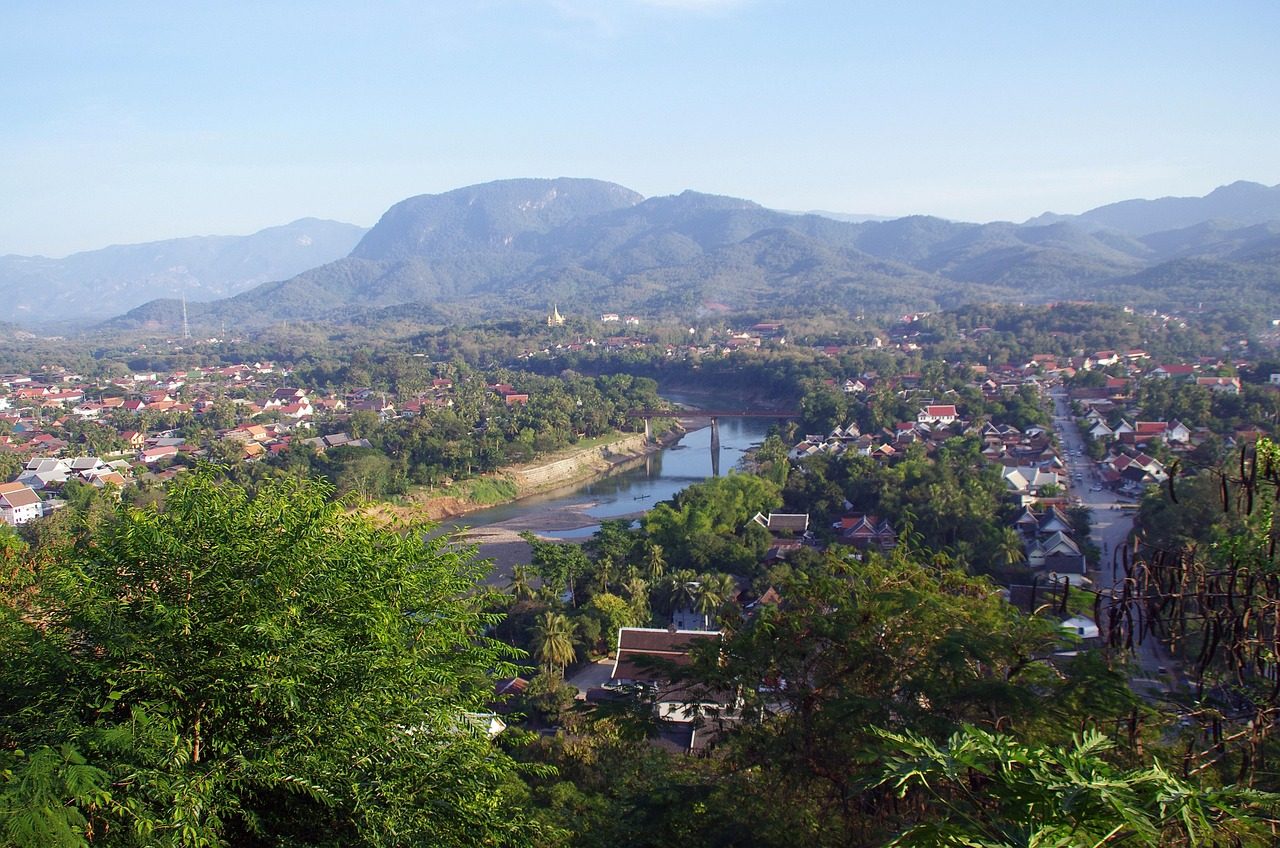
Luang Prabang is a small town, and that is part of its appeal. The UNESCO-protected Old Town sits on a peninsula between the Mekong and the Nam Khan rivers. Streets are narrow, most guesthouses and restaurants are within walking distance of each other, and the pace slows almost immediately after arrival.
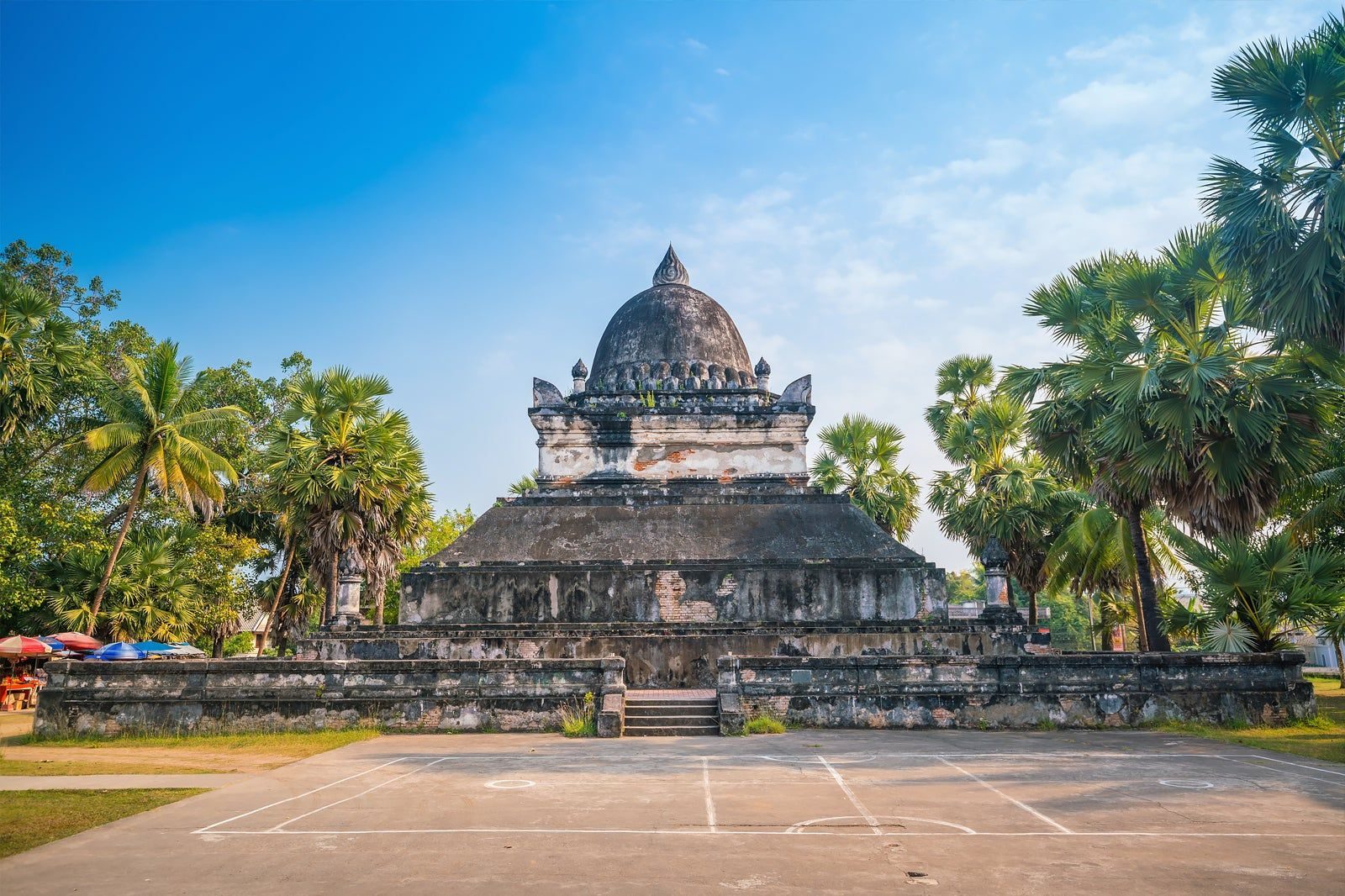
The town is at its quietest in the early morning, when monks walk the main street during Tak Bat, the daily alms-giving ceremony. If you plan to attend, do so with respect: quiet, modest clothing, no flash photography, no interaction with the monks unless invited. Many hotels offer a guided pre-dawn walk to observe the ceremony properly.
The cool season, from November to February, is the most comfortable time to visit. Days are warm and clear, mornings are cool, and the light on the river is exceptional. The green season brings heavier rain and fuller rivers, but also fewer crowds and lush vegetation. The hot season, from March to May, is dry but can reach 35°C or above.
Kuang Si Falls and Beyond
No visit to Luang Prabang is complete without a morning at Kuang Si Falls, about 30 kilometres south of town. The turquoise terraced pools are fed by a limestone spring, and the walk through the forest to the upper falls is worth the effort. Go early — by mid-morning the most accessible pools fill with visitors.
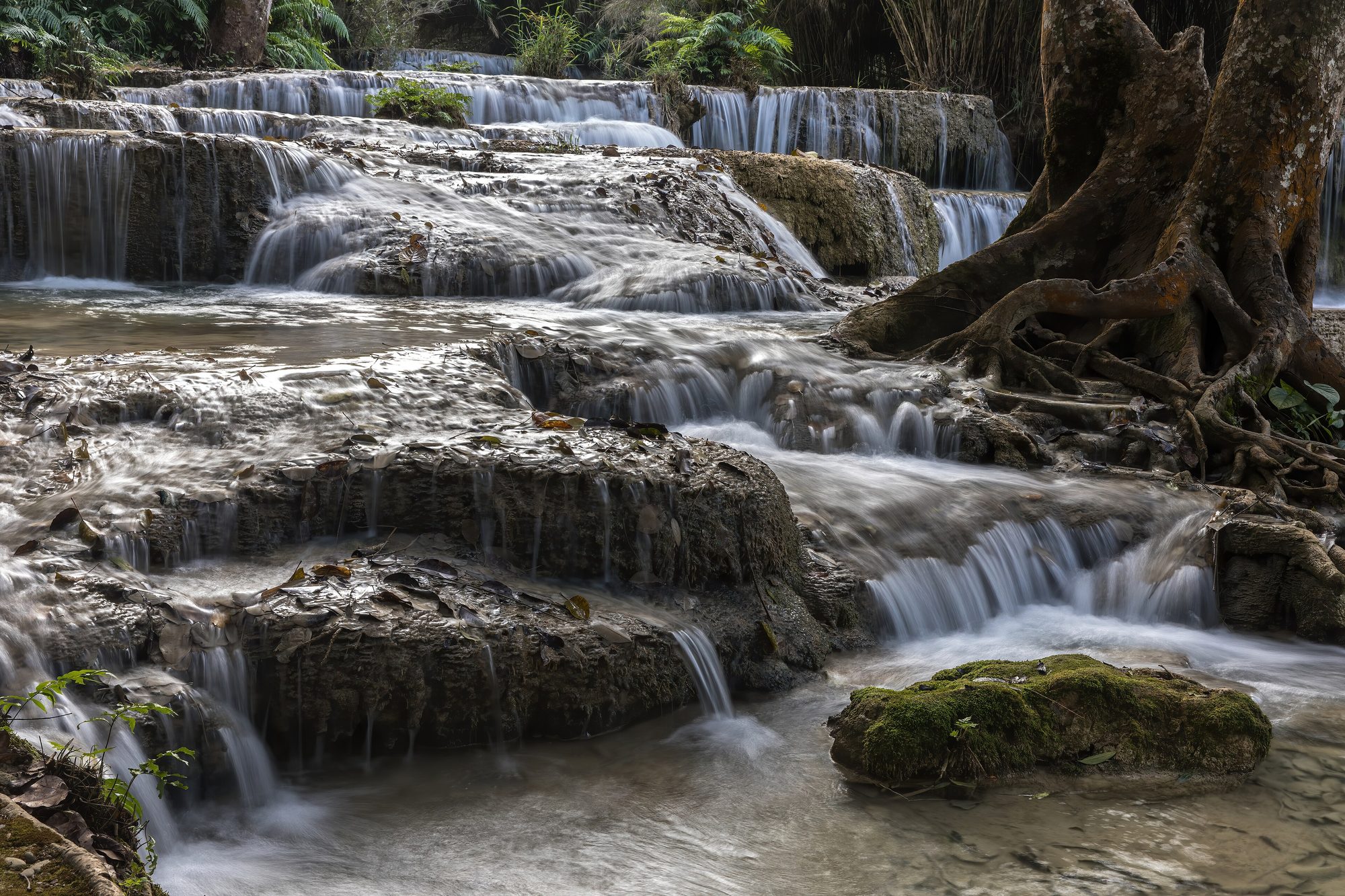
Photo: Basile Morin · CC BY-SA 4.0 · via Wikimedia Commons
The road from town to Kuang Si is a pleasant tuk-tuk ride through villages and rice fields. For official destination information and practical travel advice for Laos, Tourism Laos is a useful starting point.
Settling In: A River Property Outside Town
Riverside hotels a short distance from the Old Town, such as The Namkhan, a Small Luxury Hotels of the World member on the Nam Khan River, offer a quieter first night after a long journey by flight or overland.
From the river, the night market, Wat Xieng Thong and the other temples are all reachable without a long drive, and after a long trip the first evening usually calls for very little.
Questions
How do I get from Hanoi to Luang Prabang?
The fastest route is a direct flight from Hanoi Noi Bai (HAN) to Luang Prabang (LPQ), taking around one hour. The overland bus via Nam Phao–Nong Haet takes 24–28 hours. A third option combines travel to Vientiane with the Lao–China Railway north to Luang Prabang.
How many days should I spend in Luang Prabang?
Three to five days is enough to see the temples, spend a morning at Kuang Si Falls and attend the Tak Bat ceremony. For a wellness retreat or slower exploration, a week or more makes sense. Luang Prabang rewards unhurried travel.
How far is the train station from Luang Prabang?
The Lao–China Railway station is at Luang Prabang New Town, some distance from the UNESCO Old Town peninsula. A tuk-tuk or taxi to the central town takes roughly 20–30 minutes. Arrange onward transport in advance or confirm with your hotel.
Is Luang Prabang worth visiting?
For travellers who value a place that is genuinely calm, historically significant and largely undeveloped, yes. It holds UNESCO World Heritage status for its preserved Buddhist architecture and living Lao traditions. The surrounding landscape — rivers, waterfalls, forested hills — adds considerably to its appeal.